

GBE in the Women's Game: Summer 2026 Bulletin
As we prepare for the webinar next Tuesday, it is worth a look at this summer's window so far to understand the direction of travel in GBE recruitment in the women's game


With the Summer 2026 transfer window entering its final fortnight ahead of the 3 September deadline, recruitment trends across the Women’s Super League (WSL) and WSL 2 demonstrate a stark structural divide in how clubs navigate the Governing Body Endorsement (GBE) landscape.
Through mid-August 2026 (at the time of writing), 138 total incoming transfers have been completed across the top two tiers (69 in the WSL and 69 in WSL 2). While the raw volume of incoming player movement is evenly balanced across divisions, the reliance on overseas markets differs sharply:
WSL International Reliance: 51% of all WSL incomings (35 of 69) required a GBE application, reflecting a top tier operating on an integrated global market
WSL 2 Domestic Insulation: Only 10% of WSL 2 incomings (7 of 69) were non-domestic GBE signings, with 90% sourced domestically or via Common Travel Area (CTA) exempt pathways.
League Banding Concentration: 86% of all GBE-qualifying moves across both tiers originated in Band 1 competitions, with 14% in Band 2, which obviously means that Band 3 wasn't used at all
Total Incomings: 138
├── Women’s Super League (69 Incomings)
│   ├── GBE Incomings:        35 (50.7%)
│   └── Domestic / Exempt:    34 (49.3%)
└── Women’s Super League 2 (69 Incomings)
    ├── GBE Incomings:         7 (10.1%)
    └── Domestic / Exempt:    62 (89.9%)
GBE in the Women’s Game webinar
Tuesday 25th August | 19:30 UK time
Recording available after the event
Tickets & Registration
Use GBEWOMEN25 for a discounted rate

League Banding Analysis: The Band 1 Monopoly
The Summer 2026 data reveals an overwhelming concentration of international recruitment in Band 1 leagues. Of the 42 total GBE transfers completed across both tiers:
GBE Market Share by Feeder League (42 Total Moves)
├── Frauen-Bundesliga (Germany - Band 1):     10 (23.8%)
├── Liga F (Spain - Band 1):                 8 (19.0%)
├── Serie A Femminile (Italy - Band 1):      6 (14.3%)
├── Première Ligue (France - Band 1):        5 (11.9%)
├── NWSL (United States - Band 1):           4 (9.5%)
├── A-League Women (Australia - Band 2):     4 (9.5%)
├── Damallsvenskan (Sweden - Band 1):        2 (4.8%)
├── Toppserien (Norway - Band 2):            1 (2.4%)
├── Kvindeliga (Denmark - Band 2):           1 (2.4%)
└── Vrouwen Eredivisie (Netherlands - Band 1):1 (2.4%)
Why Band 1 Dominates
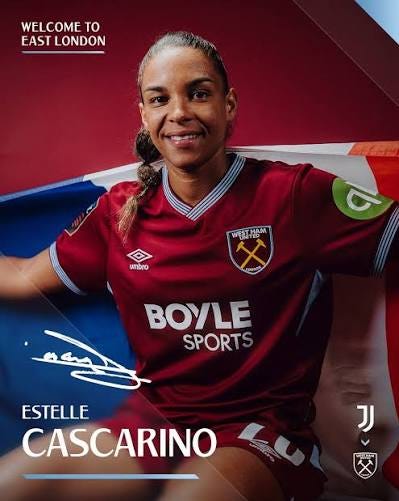
It's pretty obvious really, this is where the top players in the women's game usually already reside.
The WSL is rising to the top of the global game as a league, certainly competitively and financially, and therefore it makes sense if they can take players from the other top leagues. It cuts down on certain risks from an adaptation and quality perspective, whilst retaining legal certainty from a work permit perspective.
Recruiting from the Frauen-Bundesliga (10 signings), Liga F (8 signings), Serie A Femminile (6 signings), and Première Ligue (5 signings) offers clubs the highest mathematical certainty of reaching the 15-point PBS threshold if the player lacks senior international caps.
Minutes played in Band 1 competitions carry top-tier weighting, while qualification for or participation in the UEFA Women’s Champions League (UWCL) provides the supplementary points required to secure an endorsement.
The Strategic Role of Band 2
Band 2 recruitment (14%) was almost exclusively driven by Australia’s A-League Women (4 signings) alongside Scandinavian leagues.
The A-League continues to serve as an English-speaking, high-volume development ground for English clubs seeking physical, technically proficient talent (e.g., Alexia Apostolakis to Bristol City, Laura Hughes to Southampton, Akane Okuma to Aston Villa).
However, the traditional shopping area of Scandinavia feels a touch neglected this summer. Due to the opposite calendar issue with Sweden and Norway it can be more difficult to shop there this window, but there does look to be a shift away from those leagues to the Band 1 leagues this summer.
The Band 3 Barrier
With zero direct signings from Band 3 leagues, clubs seeking talent from South America, Africa, or lower-ranked European leagues are forced to rely on stepping stones.
Non-domestic players from outside the top bands almost universally pass through intermediate European leagues (such as the Damallsvenskan, Toppserien, or Liga BPI) before generating the international cap volume or continental minutes necessary to secure a UK work permit.
Is this a problem for recruitment teams? Especially those in WSL2 or those with smaller budgets in WSL1.
This is a definite topic for discussion in the GBE in the Women's Game webinar.
League & Club Strategy
Women’s Super League (WSL)
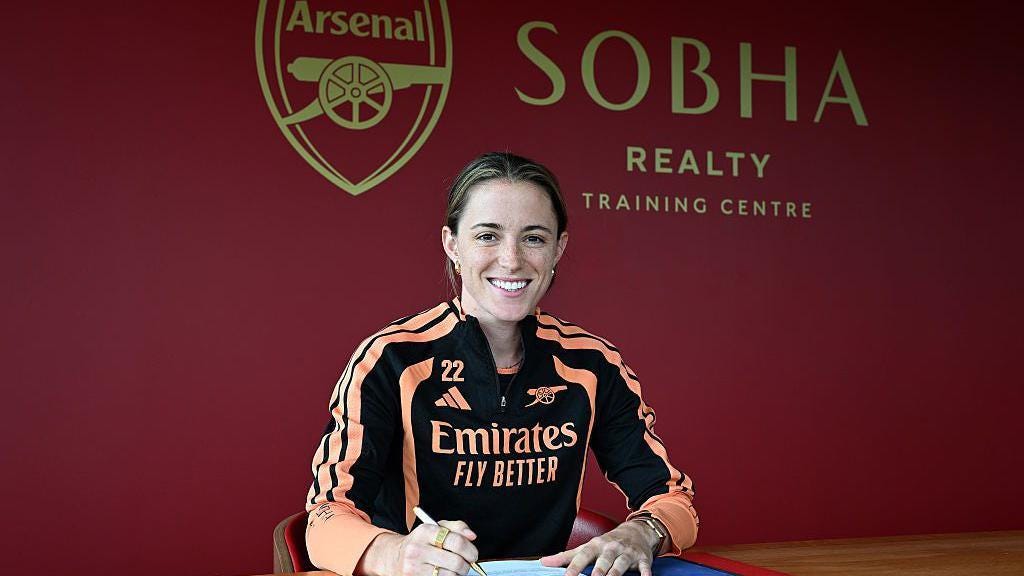
The top tier is defined by aggressive internationalisation at the summit, contrasting with selective domestic consolidation among mid-table setups.
The International Powerhouses:
Arsenal (83.3% GBE): 5 of 6 incomings arrived from overseas Band 1/2 leagues, including Ona Batlle (Barcelona), Selina Cerci (TSG Hoffenheim), Géraldine Reuteler (Eintracht Frankfurt), and Lisa Baum (RB Leipzig).
London City Lionesses (75.0% GBE): Continued their high-profile recruitment model by bringing in 6 international stars, including Alexia Putellas (Barcelona), Mapi León (Barcelona), Kadidiatou Diani (OL), Nicole Anyomi (Eintracht Frankfurt), and Janni Thomsen (Utah Royals).
Aston Villa (71.4% GBE): Built a continental spine with 5 overseas acquisitions, focusing on Scandinavia and Southern Europe (Melgård, Vangsgaard, Kielland, Harviken).
The Domestic Core:
Manchester City (0.0% GBE): Retained their focus on domestic supremacy, executing high-value internal WSL deals for Beth Mead (Arsenal, Free) and Niamh Charles (Chelsea, £500,000).
Everton (14.3% GBE): Targeted internal loans and domestic free agents (Blundell, Layzell, Silcock, Cain, Foster-Inman), completing just one overseas deal (Zara Kramžar from AS Roma).
Women’s Super League 2 (WSL 2)

WSL 2 remains heavily domestic-driven, but clear tactical outliers have leveraged GBE channels to accelerate promotion campaigns.
Newcastle United (30.0% GBE): Stood out as the single most aggressive international recruiter in the second tier. Newcastle accounted for almost half of all GBE signings in WSL 2, securing Morgan Gautrat (Orlando Pride), Hildur Antonsdóttir (Madrid CFF), and Hanna Németh (Werder Bremen) alongside top-flight domestic recruits (Gemma Evans, Rachel McLauchlan, Martha Thomas).
Ipswich Town (0 GBE / 12 Incomings): Executed the largest volume rebuild in the country without a single GBE application. Ipswich utilized the Common Travel Area (CTA) exemption by raiding the Scottish Women’s Premier League (SWPL) for prime talent (Livingstone, Slattery, Hunter, Adams, Timms, Lawton) alongside domestic WSL loans.
Targeted Outliers: Bristol City (Alexia Apostolakis), Southampton (Laura Hughes), Sunderland (Kassandra Missipo), and Leicester City (Paulina Nyström) each utilized targeted Band 1/2 GBE entries to address specific positional deficits.
Recruitment Age & Lifecycle Analysis
Club Age Outlier Matrix
├── Youth Development Focus (Avg Age < 23.5)
│   ├── Watford (WSL 2):       20.0 yrs  (Bailey 20, Teisar 20, Noble 19, Poole 19, Muya 19)
│   ├── Bristol City (WSL 2):  21.5 yrs  (Apostolakis 20, Lindström 21, Aspin 21)
│   ├── Liverpool (WSL):       22.0 yrs  (Itamura 19, Ward 20, Keating 22, Endemann 24)
│   └── Aston Villa (WSL):     23.0 yrs  (McAulay 19, Melgård 20, Okuma 21, Kielland 23)
│
└── “Win-Now” / Promotion Focus (Avg Age > 27.5)
    ├── Durham (WSL 2):        31.0 yrs  (Pennock 33, Bradley 29)
    ├── Man City (WSL):        29.0 yrs  (Mead 31, Charles 27)
    ├── Burnley (WSL 2):       28.3 yrs  (Harrison-Murray 36, Cooper 33, Burns 29)
    ├── Newcastle Utd (WSL 2): 28.0 yrs  (Gautrat 33, Evans 30, Antonsdóttir 30, Thomas 30)
    └── London City (WSL):     27.8 yrs  (Earps 33, Putellas 32, León 31, Diani 31)
The data reflects two distinct operational models:
The Peak-Performance / Promotion Strategy:
Clubs seeking immediate titles or top-flight promotion prioritize ready-made experience. London City Lionesses (27.8) and Newcastle United (28.0) recruited heavily in the 28–33 age bracket to eliminate adaptation time.
The Asset-Value & Development Strategy:
Clubs operating sustainable mid-table or development models heavily targeted the 19–22 bracket.
Watford (20.0) built almost their entire intake from unattached and academy talent, while Liverpool (22.0) and Aston Villa (23.0) recruited high-ceiling international talent with multi-year resale and performance runways.
Key Regulatory Takeaways Ahead of Deadline Day
Band 1 Is the Only Predictable International Route
With no ESC slots to fall back on, attempting to sign non-internationals from Band 3 remains a non-persued strategy under current Home Office and FA criteria.


The SWPL and League of Ireland Are Crucial Pressure Valves:
For WSL 2 clubs with limited operational budgets for international visa processing, the CTA-exempt status of Scotland and Ireland provides talent without GBE overheads.
The question would be, what depth of talent is actually available from these markets.
Planning for Points:
Clubs targeting late-window overseas deals must ensure players have logged 70% domestic minutes in Band 1 or possess sufficient UWCL/international exposure to clear the 24-point threshold automatically.
For more complex point calculations or regulatory guidance/proof, our services at GBE Expert Hub should be able to help you in this issue.
GBE in the Women's Game webinar
Tuesday 25th August | 19:30 UK time
Recording available after the event
Tickets & Registration
Use GBEWOMEN25 for a discounted rate